BRIEF: Gulfstream Expected to Launch All-new G450 Business Jet
Category Archives:Aviation News
BRIEF: Gulfstream Expected to Launch All-new G450 Business Jet

Gulfstream is expected to launch an all-new business jet in the category of a G450 when it hosts a customer event in Savannah, Ga., on Oct. 14.
The plane is expected to be positioned above the company’s current G450, but won’t replace it, Cowen and Co. aerospace analyst Cai von Rumohr wrote in a note to investors Thursday.
The plane “looks like a winner,” von Rumohr wrote.
It’s expected to be a clean sheet design of an aluminum aircraft with a slightly larger cabin capacity and longer range than Gulfstream’s current G450, von Rumohr wrote.
“These features will make it a more effective competitor to the Falcon 5X and Bombardier Global 5000 at a higher price than the G450; and since the new (business jet) isn’t a direct replacement of the G450, its cannibalizing impact on G450 demand should be somewhat limited,” he said in the note.
Deliveries of the new G450 are expected to begin possibly near the end of 2015, von Rumohr wrote.
Reach Molly McMillin at 316-269-6708 or mmcmillin@wichitaeagle.com. Follow her on Twitter: @mmcmillin.
Copyright 2014 – The Wichita Eagle
Category Archives:Aviation News
Airbus A350-900 receives EASA Type Certification

The world’s latest generation commercial airliner, the A350-900, has received Type Certification from the European Aviation Safety Agency (EASA) on 30th September 2014. The certified aircraft is powered by Rolls-Royce Trent XWB engines. Federal Aviation Administration (FAA) certification will follow shortly.
The EASA A350-900 Type Certificate was signed by EASA’s Executive Director, Patrick Ky. The document was handed over to Airbus’ Executive Vice President Engineering, Charles Champion and Airbus’ A350 XWB Chief Engineer, Gordon McConnell.
“Receiving the A350-900 Type Certification from EASA is a great achievement for Airbus and for all our partners who have contributed to designing, building and certificating this fantastic, new generation aircraft. The A350-900 is now ready to fly from the nest and be enjoyed by airlines and passengers,” said Fabrice Brégier, Airbus President and CEO. “The A350 XWB embodies many extra innovative technologies which make all the difference in passenger comfort and airline efficiency.”
“The A350 XWB manufacturing programme has also been innovative and ambitious, aiming for a fully mature aircraft at entry into service and this is what we are proud to be delivering to our first A350 XWB customer, Qatar Airways, before the end of the year. Our fleet of five test aircraft completed the certification campaign, on time, cost and quality. Accumulating more than 2,600 flight test hours, we created and successfully achieved one of the industry’s most thorough and efficient test programmes ever developed for a jetliner,” said Fabrice Brégier, Airbus President and CEO.
The A350-900 Type Certification comes after successfully finishing a stringent programme of certification trials which has taken its airframe and systems well beyond their design limits to ensure all airworthiness criteria are fully met.
The A350 XWB is Airbus’ all-new mid-size long range product line and the newest member of Airbus’ leading widebody family. The A350 XWB stands out in its class thanks to its combination of passenger comfort, technological innovation and its unique industrial process. Built hand-in-hand with our customers, the A350 XWB sets new standards in terms of passenger experience, operational efficiency and cost-effectiveness. At the end of May 2014, the A350 XWB had won 750 orders from 39 customers worldwide.
Source: Airbus
Category Archives:Aviation News
TransNusa took delivery of its first ATR 42-600

TransNusa Aviation Mandiri, the fast-growing Indonesian airline, today took delivery of its first new generation ATR 42-600. The carrier has options for three more ATR 42-600s.
TransNusa is introducing the new ATR 42-600 for the first time in Indonesia and the aircraft will be a turning point for the airline’s new development efforts towards the fly-in, fly-out (FIFO) charter segment. The 5-year contract award TransNusa won this year from one of the Indonesia’s large oil consortium reflects the market need and that the ATR turboprop is the ideal aircraft type for these services. The ATR 42-600 has versatile capabilities on short, unpaved and narrow runways and is well suited for these demanding operations. Its smooth, high flying speed and new Armonia design interior will give the FIFO passengers a new comfortable flying experience.
“Placing our turboprop services with ATR 42 aircraft on the stringent FIFO operations represents great value for money for energy companies. It will increase their efficiencies as it enables companies to consolidate their FIFO schedule and still travel direct to their sites even on gravel and narrow runways, while increasing passenger comfort,” TransNusa Chief Executive Officer Jodjana Juvenile said.
Patrick de Castelbajac, ATR Chief Executive Officer said: “We are glad to be associated with TransNusa’s success in the FIFO transport support sector. With the newly acquired ATR 42-600 TransNusa will be able to count on the aircraft’s versatility and flexibility to provide eco-efficient solutions for air charters to any location throughout Indonesia and beyond. The ATR-600 series aircraft will provide TransNusa and its customers with important reductions in operating and maintenance costs optimizing and reinforcing its economic advantages to suit differing needs of the operation.”
It is anticipated that the first ATR 42-600 would enter into service this November. The chartered ATR 42 will open up its first FIFO service departing from Jakarta’s Halim Airport to Matak Airport in Natuna Island, conducting six return flights per week.
To ensure the smooth and safe running of the ATR 42-600 throughout the FIFO service, TransNusa has chosen to cover its aircraft with the Global Maintenance Agreement (GMA) signed recently with ATR. The contract will ensure the management of maintenance activities and the supply of spare parts for the ATR 42-600 for 5 years.
Source and image: ATR Aircraft
Category Archives:Aviation News
BOC Aviation delivers first A320 to Vistara
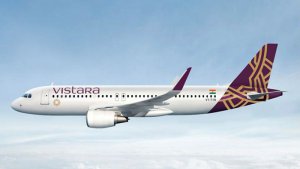
BOC Aviation Pte. Ltd. (“BOC Aviation”) is pleased to announce the delivery of the first of 20 Airbus A320 Family aircraft to TATA-SIA Airlines Limited, the newest Indian airline branded as Vistara. The order includes seven NEO variants.
“BOC Aviation is pleased to partner with Vistara by leasing 20 A320 aircraft over the next four years,” said Mr. Robert Martin, Managing Director and Chief Executive Officer of BOC Aviation. “This is the largest leasing agreement in our history, and underscores our confidence in both Vistara and the Indian market. As both business and leisure travel demand rise within India, and to and from the sub-continent, the Airbus A320 family is ideal to meet travellers’ aspirations. The A320’s fuel and operational efficiency is also well-suited for airline operators.’’
Mr. Yeoh Phee Teik, Chief Executive Officer of Vistara, said, “We are very excited to receive the delivery of our first aircraft. The selection of the modern Airbus A320-200 aircraft is part of our strategy to offer the best service to our customers. We are pleased to partner BOC Aviation, which has demonstrated professionalism and superior customer service in leasing our fleet and ensuring a timely launch. The proven and reliable quality of Airbus meets our stringent standards for safety, cabin comfort, fuel efficiency and overall operational reliability.”
Source and image: BOC Aviation/ Vistara
Category Archives:Aviation News
Pilot jobs in Asia: thanks, but no thanks

This Tuesday the Russian flag carrier Aeroflot announced the welcoming of its first foreign pilot within its ranks thus marking the opening of a new yet small market for professionals with salaries resembling the ones in Asia. However, while the Russian carrier had 10 candidates to a single place competition with over 800 applications received, it seems that most operators from other booming markets are losing their luck when it comes to recruiting experienced flight crews, as European pilots are becoming increasingly reluctant to move outside their home region.
”Despair – that‘s how we may now call the general mood of the European job market back in 2008-2012. Budget cut-offs, layoffs, flight hour reductions, and, eventually, employer bankruptcies – many European pilots had to suffer through at least one of these often subsequent stages. With this in mind, there’s no wonder that many of them had decided to seek better opportunities outside the troubled region and move to the Middle East, Asia, or Asia Pacific,” relates the crisis market environment Skaiste Knyzaite, the CEO of AviationCV.com. „But nowadays the market is becoming more and more stable, and it seems that pilots are starting to feel increasingly confident in their future. Though some might be mislead by the strikes.”Pilot jobs in Asia: thanks, but no thanks
The ongoing strikes of the Air France pilots’ union (as well as the might-have-been strike of the Lufthansa crews) were the clear indicators of the existing disagreement between the employer and its employees. However, the reasons for the strikes were rather linked to natural market processes (rising pressure and competition from low-costers and carriers from the Middle East) than to a major financial downturn. In other words, carriers are currently eager to decrease their costs along with further fleet expansion in contrast to costs and fleet optimisation during the crisis.
Moreover, though the strikes will certainly affect the September figures, the overall European air travel market keeps regaining its confidence. According to the latest ACI Europe report for July 2014, the year-on-year passenger air traffic has grown by another 4% in the EU-airports and by over 6% in other airports within the continent. Even the historically weak segment of cargo traffic has shown an increase of 3%.
”For already some time now we have been observing a certain trend suggesting that European pilots are no longer as eager to move to the emerging markets for a higher salary as they used to be. Since many European airlines are once again on the manufacturers’ order lists – take at least the recent Farnborough airshow – there is ground to expect new opportunities for the comfort of living and working back at home. Naturally, this might be one of the reasons behind some pilots choosing to stay in their current positions with current qualification rather than making a career jump with an Asian employer,“ says S. Knyzaite.
At the same time, many pilots might still be concerned about the influence that the low-cost business model is having on their salary rates, particularly if an airline employs specialists from outside the region. According to Skaiste Knyzaite, it is hard to overestimate the influence of low-costers on the development of the modern air transportation market. During the industry downturn when the overall traffic declined by 6%, no-frill airlines were the only ones to report a positive growth (18%), states Eurocontrol. Moreover, the economic crisis showed that legacy carriers simply cannot afford to keep operating in a traditional way, and they must adopt at least some of the low-costers’ business principles.
„Actually, the business models of legacy and low-cost carriers have been approaching each other for already a decade if not longer now. And it’s not only about e-tickets, extra fees, etc. Sooner or later, the personnel also face certain changes. But contrary to popular belief, low-cost doesn‘t always mean low-paid. The average pilot salary in major low-cost airlines corresponds to the market-wide figures with approx. 9-10 thousand USD/month for experienced Captains and 70-80% of that for First Officers. Certainly, smaller low-costers will pay less to their pilots, but so will small legacy and regional airlines,” explains Skaiste Knyzaite, the CEO of AviationCV.com. “In other words, the money are not that bad. In addition to the possibility of staying close to home, the significantly lower risks associated with the potentially sudden bankruptcy of one’s employer are keeping an increasing number of European pilots from seeking jobs in the international job search market. However, with the summer season to end, many pilots (particularly those working for charter carriers) will have their season contracts terminated. What’s next? Why not consider a contract outside Europe where the peak season is only starting. After all, being a pilot means being a man of the world.”
Source and image: AviationCV